




Why Story-Based Coaching Works for Kids
Children don’t learn the same way adults do. While adults can reflect, analyze, and change behavior through conversation alone, children learn best through stories, experiences, and guided discovery.
Story-based coaching works because it aligns with how a child’s brain develops, how emotions are processed, and how skills are internalized. Rather than lecturing or “fixing” behavior, stories create an emotionally safe, engaging way for children to explore new ideas, practice skills, and apply what they learn in real life.
At Adventures in Wisdom, story-based coaching is the foundation of how children build mindset skills for confidence, resilience, self-leadership, and emotional strength.

How Children Learn Differently Than Adults
Children are not just smaller adults. Their brains are still developing, particularly the frontal lobe areas responsible for critical thinking, emotional regulation, and self-reflection.
Adults have fully developed frontal lobes and years of life experience to draw from. This allows adult coaching to rely heavily on conversation, reflection, and open-ended questions. Adults can analyze their thoughts, consider different perspectives, and make choices and changes based on insight alone.
Children, however, are still building these abilities. Because of this, the coaching process that works so well for adults, doesn’t work effectively for children. Children need an experiential teaching component added to the coaching process.
For many children:
- abstract explanations are difficult to understand and remember
- being asked too many reflective questions can feel confusing or overwhelming
- direct instruction without engagement can lead to resistance or disengagement
When learning feels unclear or uncomfortable, children are less likely to internalize new ideas, even when they really want to do well.
Stories help turn concepts such as self-esteem, resilience, and self-leadership into relatable experiences. Characters, situations, and metaphors give children something they can see, imagine, and remember.
This is why story-based coaching is so effective. Instead of asking children to analyze their thoughts before they are ready, stories gently guide understanding in a way that is fun, engaging, and works!
→ Learn more about how life coaching for kids differs from adult coaching
Why Stories Create Emotional Safety
Stories are a non-threatening way to help children learn how to navigate life.
Most children don’t like to talk about feeling nervous, afraid, or unsure. Those conversations can feel uncomfortable or even overwhelming. However, many children love to talk about grungies, dragons, or characters facing challenges in a story.
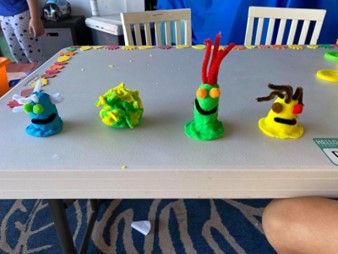
These are terms from our curriculum that give children a safe and emotionally appropriate way to talk about what they are feeling and thinking, without feeling exposed, judged, or embarrassed.
By using stories and characters, children are able to explore difficult emotions and situations at a comfortable distance. Instead of feeling like the focus is on them, they can reflect on what the character is experiencing. This emotional safety opens the door to awareness, curiosity, and growth.
Stories help children get in touch with their thoughts and feelings in a way that feels natural and respectful of where they are developmentally.
Stories Are a Powerful Way to Start Important Conversations
Stories are also a powerful way to begin important conversations with children.
Rather than putting a child on the spot or asking them to explain how they feel, stories invite discussion organically. As children follow a character through a challenge, they begin to notice familiar patterns (thoughts, emotions, and situations) that mirror their own experiences.
Through story-based coaching, children have the opportunity to experience a skill through the situation the characters are facing. With the guidance of their coach, they can then explore how that same skill might apply in their own life.
This approach allows children to reflect, practice, and grow without pressure. Conversations feel engaging and meaningful, not interrogative or uncomfortable.
Stories Support Practice, Reinforcement, and Skill Building
Through coaching, children are learning new mindset skills and life skills that will support them in life. And like any skill, these take practice to develop.
Stories are especially effective because they are memorable. Once a child connects with a character or situation, that story becomes a shared reference point between the child and their coach.
For example, one of the coaching stories that teaches children about having an “I can do it” mindset is called Canville and Cantville: A Tale of Two Towns.
If a child begins to feel discouraged or starts telling themselves they can’t do something, the coach doesn’t need to lecture or correct them. Instead, the coach might simply ask:
“What would this look like if you were living in Canville?”

That single question instantly brings the child back to the story, the characters, and the skill they’ve already learned. It helps the child reconnect with a more empowering way of thinking.
Referencing stories in this way refreshes skills naturally and keeps learning engaging. We often describe this approach as “learning without lecture” or “teaching without preaching.”
Stories Turn Learning Into Experience
One of the biggest differences between information and transformation is experience.
Children don’t change simply because they’ve been told what to do. They change when they experience new ways of thinking, responding, and problem-solving in a way that feels real to them.
Story-based coaching is intentionally experiential. Stories are not used on their own, but as part of a guided coaching process that includes reflection, conversation, and practice. Children don’t just hear about a skill, they see it in action through a character, explore it with their coach, and then try it out in their own lives.
This experiential approach helps children move beyond memorization. Instead of recalling advice, they recall moments, characters, and choices. That turns learning into a skill they can use when challenges arise at school, at home, or with peers.
Over time, these experiences build confidence. Children begin to trust themselves because they’ve practiced navigating challenges in ways that feel familiar and achievable.
A Real-Life Example: Lily

Lily loved dance, but when it came time to perform her solo, fear took over. During competitions, she became so anxious that she ran off stage in tears, despite practicing for weeks.
Through story-based coaching, Lily was introduced to characters who faced fear, self-doubt, and pressure, just like she was experiencing.
Instead of being told to “be brave,” Lily learned how fear worked and how to move through fear and choose courage and positive self-talk using simple, child-friendly tools.
Over the next few weeks, Lily began applying what she learned from the stories during rehearsals and competitions. With each session, her confidence grew. Within just a few coaching sessions, Lily performed her solo on stage and won first place in the competition.
The stories gave Lily a way to understand her fear and build confidence in a way that felt safe and empowering.
Why Story-Based Coaching Is So Effective for Kids
Story-based coaching works because it aligns with how children naturally learn, feel, and grow.
Rather than relying on pressure, correction, or constant questioning, stories create a supportive environment where children can explore ideas at their own pace. They invite curiosity instead of defensiveness and engagement instead of resistance.
Through stories, children learn that:
- challenges are a normal part of life
- thoughts influence feelings and behavior
- they have choices in how they think AND how they respond
- skills can be learned and practiced over time
This approach supports children in developing confidence and resilience without needing to be “fixed”. By meeting children where they are developmentally and emotionally, story-based coaching helps them build skills they can carry forward as they grow.
How Story-Based Coaching Fits Into Life Coaching for Kids
Story-based coaching is an integral part of a thoughtful, structured life coaching process designed specifically for children.
Stories are used alongside:
- intentional skill development
- guided coaching conversations
- real-life application and reflection
- communication and collaboration with parents
Within this process, stories act as a bridge. They connect abstract ideas to everyday experiences and give children a shared language they can return to again and again as they practice new skills.
This is one of the reasons story-based coaching is so effective within life coaching for kids. It supports growth that is both meaningful in the moment and sustainable over time.
Next Steps for Parents
If you’re ready to support your child in learning powerful skills to help them be confident and prepared to navigate life, story-based life coaching may be a powerful and supportive option.
Many parents choose this approach because it feels respectful of who their child already is while helping them build skills for confidence, self-esteem, resilience, self-leadership, and goal achievement.
If you’d like to explore this further, your next step can simply be a conversation.
You can:
- learn more about life coaching for kids
- explore whether coaching may be a good fit for your child
- connect with a certified coach to ask questions and learn about the process