




Life Coaching for Kids vs. Therapy and Counseling
When parents are exploring support for their child, it’s common to wonder whether life coaching, therapy, or counseling is the right choice. Each approach serves a different role, and understanding those differences can help you make a thoughtful, informed decision.
Life coaching for kids and therapy or counseling are not opposing options. In many families, they complement one another as part of a child’s broader support system.

A Parent-Friendly Overview
Life coaching for kids focuses on building skills for the present and future. Therapy and counseling often focus on healing, processing, and emotional support related to past or ongoing challenges.
Neither approach is “better” than the other. The right support depends on your child’s needs, experiences, and goals.
On This Page
- Life Coaching for Kids: Purpose and Focus
- Therapy and Counseling: Purpose and Focus
- Key Differences at a Glance
- When Therapy or Counseling May Be the Right Choice
- When Life Coaching for Kids May Be a Good Fit
- Can Coaching and Therapy Be Used Together?
- How to Decide What Support Your Child Needs
- Next Steps for Parents
Life Coaching for Kids: Purpose and Focus
Life coaching for kids is a non-clinical, skill-building approach. It helps children develop mindset skills and life skills such as confidence, self-esteem, resilience, decision-making, self-leadership, and goal achievement.
Coaching is typically used when:
- A child is emotionally stable but wants support building skills
- Parents want proactive, growth-oriented support
- A child is navigating everyday challenges, transitions, self-esteem issues, or confidence issues
Coaching does not diagnose or treat mental health conditions. Instead, it supports children in learning how to understand themselves and navigate life more effectively. Focusing on mental fitness. The key is learning about the power of their mind and how their thoughts shape their experiences and what they can do to shape their thoughts. Thoughts about themselves, how the world works, and what is possible for their lives.
Therapy and Counseling: Purpose and Focus
Therapy and counseling focus on supporting a child’s emotional and mental health. These approaches may involve processing past experiences, addressing trauma, managing anxiety or depression, managing an obsessive compulsive disorder, managing an eating disorder, or supporting a child through significant emotional distress.
Therapy or counseling may be most appropriate when:
- A child has experienced trauma or loss
- A child is struggling with anxiety, depression, or emotional regulation
- A clinical diagnosis or mental health support is needed
Licensed therapists and counselors are trained to assess and treat mental health concerns and provide therapeutic interventions.
Key Differences at a Glance
Life coaching for kids and counseling and therapy both play important roles in supporting children’s mental wellness. Here’s a quick glance.
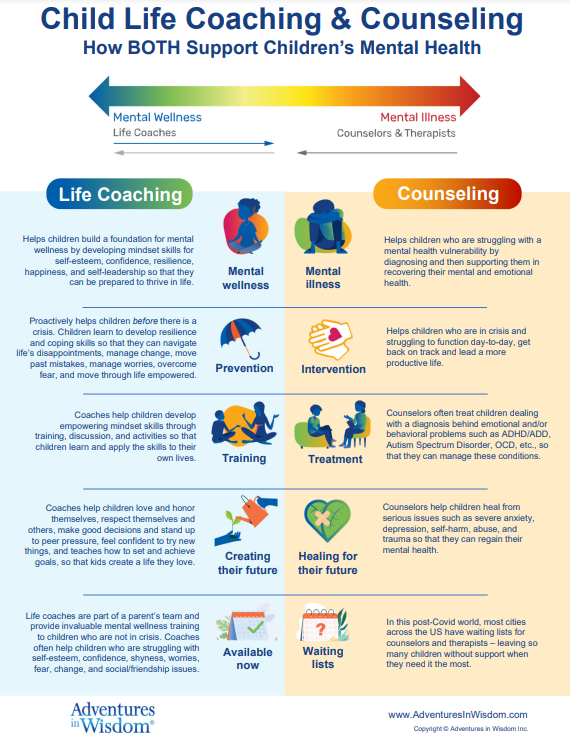
Life Coaching for Kids
- Forward-focused and skill-based
- Emphasizes growth, mindset, and self-leadership
- Proactive and developmental
- Not clinical or diagnostic
Therapy / Counseling
- Often past- or present-focused
- Addresses emotional distress or mental health concerns
- May involve diagnosis or treatment
- Led by licensed mental health professionals
When Therapy or Counseling May Be the Right Choice
Therapy or counseling may be the best first step if your child is:
- Experiencing significant emotional distress
- Showing signs of serious anxiety, depression, or trauma
- Harming or threatening to harm themselves or others
- Struggling to function in daily life
- In need of clinical assessment or intervention
In these cases, therapeutic support provides essential care and healing.
When Life Coaching for Kids May Be a Good Fit
Life coaching may be supportive when:
- Your child wants to build confidence or resilience
- Your child is struggling with negative self-talk and diminished self-esteem
- You’re noticing challenges with motivation, self-belief, or decision-making
- Your child is navigating normal developmental transitions
- Your child is wanting to improve academic or extracurricular performance
- Your child is navigating friendship issues or peer pressure
- You want proactive support rather than crisis-based intervention
Coaching helps children strengthen skills they can use across many areas of life.
Can Coaching and Therapy Be Used Together?
Yes. Many families choose to use life coaching and therapy together.
Therapy can support emotional healing and mental health, while coaching helps children proactively build skills, strengthen self-esteem, build confidence, and apply what they’re learning in everyday life. Together, along with parental guidance, these approaches can provide a powerful support structure for a child.
A Coaching Snapshot: Alex
When Alex felt so anxious that she couldn’t attend school, her parents were desperate to find support. They discovered there was a long waiting list for child counseling services, and in the meantime they decided to begin working with a WISDOM Coach.
Through coaching, Alex learned how her thoughts about school were shaping how she felt, and she began practicing mindset tools that helped her calm her anxiousness and approach school with more confidence. After just one coaching session where Alex learned about the power of her thoughts, she returned to school and didn’t miss another day.
As she built her mindset skills, she became more willing to face situations that previously felt overwhelming including attending an overnight camp, successfully completing a ropes course, and participating in school activities. Things her parents thought would never happen.
Coaching worked long-term. When Alex advanced to high school (which starts in Grade 7 in Australia), she represented the school in athletics in the region and state level!
Her Mom shared, “She’s just a different girl from having such anxiety to now representing the school!’ And they’ve never looked back.”
How to Decide What Support Your Child Needs
Choosing support doesn’t have to be overwhelming. Consider:
- What challenges your child is facing
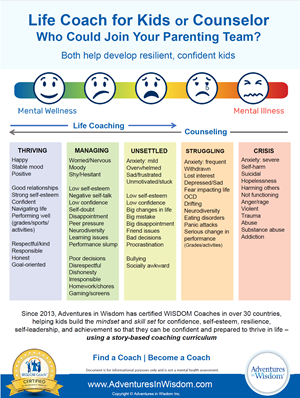
- Whether those challenges feel clinical or skill-based
- Your child’s openness to conversation and reflection
- Guidance from trusted professionals
If you’re unsure, speaking with a qualified professional can help clarify next steps. This resource is designed to help you see where both coaching and counseling can support your child. A conversation with a coach can also help you determine if working with a coach is a good fit for your family.
Next Steps for Parents
If you’d like to explore life coaching as a possible support for your child, the next step is often a simple conversation.
Connect with a Certified WISDOM Coach
Certified WISDOM Coaches are trained to work with children using a story-based, developmentally appropriate coaching approach. Connecting with a coach can help you explore your child’s needs and whether coaching may be a good fit.