




When to Add a Life Coach for Your Child
Many parents explore life coaching not because something is “wrong,” but because they want to proactively support their child’s confidence, self-esteem, emotional wellbeing, ability to navigate challenges, and ability to achieve their goals and reach their full potential.
Life coaching for kids is about skill-building, not “fixing”.
A life coach does not replace parenting, teaching, or therapy. Life coaching is often chosen by engaged parents who want to give their child additional tools to be confident and prepared to thrive in life.
This page is designed to help you understand if adding a life coach could be supportive for your child at this stage.
What Life Coaching for Kids Is Designed to Support

Life coaching for kids focuses on helping children build internal skills they can use across many areas of life, including:
- Confidence and healthy self-esteem
- Emotional awareness and regulation
- Resilience after setbacks
- Motivation and follow-through
- Decision-making and responsibility
- Self-leadership and independence
Coaching is proactive and growth-oriented, supporting children as they learn how to navigate everyday experiences more effectively.
Signs Your Child May Benefit from Life Coaching
Life coaching may be supportive if you notice one or more of the following patterns, not as a diagnosis, but as signals that your child could benefit from additional skill-building support:
- Your child struggles with confidence or self-doubt
- Emotions feel big and hard to manage
- Frustration or avoidance shows up when things feel challenging
- Your child has difficulty expressing thoughts or feelings
- Motivation or follow-through feels inconsistent
- Your child is sensitive to mistakes or setbacks
- You sense your child wants support but doesn’t know how to ask
This list is not about labeling a child. It’s about noticing patterns and exploring support with curiosity and care
What This Looked Like in Practice: Mike
Ten-year-old Mike was having trouble managing big emotions, especially anger. His teachers also noticed that he seemed withdrawn at school, and at home he often fought with his brothers. His mom felt upset, helpless, and unsure what kind of support would actually help.
When Mike began working with a Certified WISDOM Coach, he started learning how his mind worked and how his thoughts were connected to his feelings and reactions. Over time, Mike practiced skills for handling frustration, improving self-talk, and calming big feelings before they escalated.
Mike’s story reflects a common reason parents choose coaching: not because a child is “bad,” but because the child needs practical tools to understand themselves and navigate emotions in healthier ways.
Life Coaching Is Often Helpful During Transitions
Parents often consider coaching during times of change, such as:
- Transitioning to a new school or grade
- Shifts in friendships or social dynamics
- Changes in family structure or routines
- Developmental stages that bring new emotional awareness
- Preparing for increased independence
Transitions can be powerful opportunities for children to build resilience and self-leadership with the right support.
When Life Coaching May Not Be the Right Fit
Life coaching for kids may not be appropriate if a child is experiencing:
- Significant emotional distress
- Trauma that requires clinical support
- Anxiety, depression, or mental health concerns needing diagnosis or treatment
In these cases, counseling or therapy may be the most appropriate first step.
If you’re unsure, speaking with a qualified professional can help clarify next steps. These two resources are designed to help you see where both coaching and counseling can support your child. A conversation with a coach can also help you determine if working with a coach is a good fit for your family.

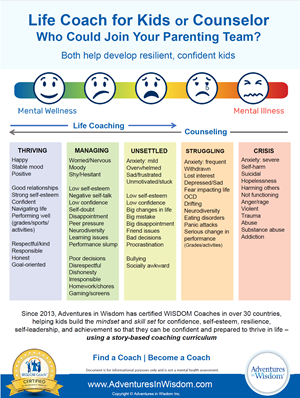
Coaching Is Not About Fixing a Child
One of the most important things for parents to understand is that life coaching is not about correcting behavior or fixing a child.
Coaching helps children:
- Understand how their mind works
- Learn language for thoughts and emotions
- Practice skills in a supportive environment
- Build confidence through self-discovery
Many parents choose coaching precisely because they want to support growth without pressure, judgment, or labels.
How Parents Use This Checklist
Parents use this checklist in different ways:
- As a reflection tool
- As a conversation starter with their child
- As a guide when speaking with a coach
- As reassurance that support is proactive, not reactive
There is no “right time” that applies to every child. The goal is alignment—between your child’s needs, readiness, and the type of support offered.
Next Steps for Parents
If this checklist resonates with what you’re noticing, the next step doesn’t have to be a commitment—it can simply be a conversation.
Connect with a Certified WISDOM Coach
Certified WISDOM Coaches are trained to work with children using a story-based, developmentally appropriate life coaching approach through Adventures in Wisdom.
Connecting with a coach allows you to:
- Share what you’re noticing in your child
- Ask questions about how coaching works
- Explore whether life coaching may be supportive right now
- Understand what next steps could look like for your family